
NO ARM. NO BOTTLENECK. NO LIMITS.
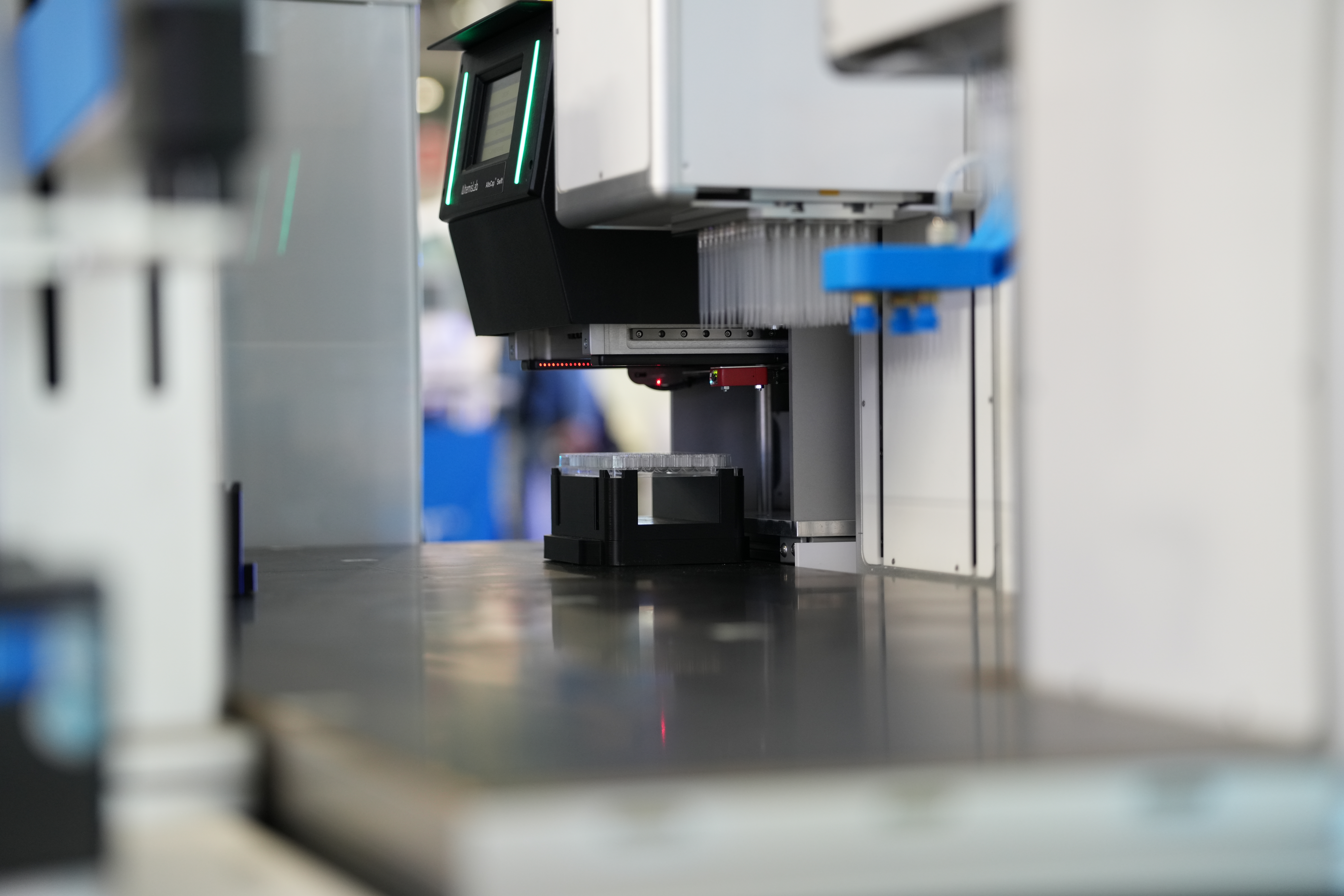
Traditional lab automation is built around one arm. One arm means one plate at a time. No matter how many instruments you add, throughput is always capped by the arm cycle time.
-
01One arm, one plate at a time Every sample waits for the arm to be free. Instruments sit idle while the arm is busy elsewhere. You pay for capacity you cannot use.
-
02Scaling does not scale throughput Adding instruments to an arm-based system does not proportionally increase output. The arm remains the limit regardless of how much you invest.
-
03Transfer steps introduce error Every lift, move, and set-down is an opportunity for contamination, misalignment, or dropped samples. More transfers means more risk.
-
04Reconfiguration is expensive Changing an arm-based workcell requires layout redesign, re-teaching, and downtime. The system fights every workflow change.
-
05Cost to scale is punishing Each additional arm, workcell, or robot multiplies cost linearly. The economics never improve as you grow.
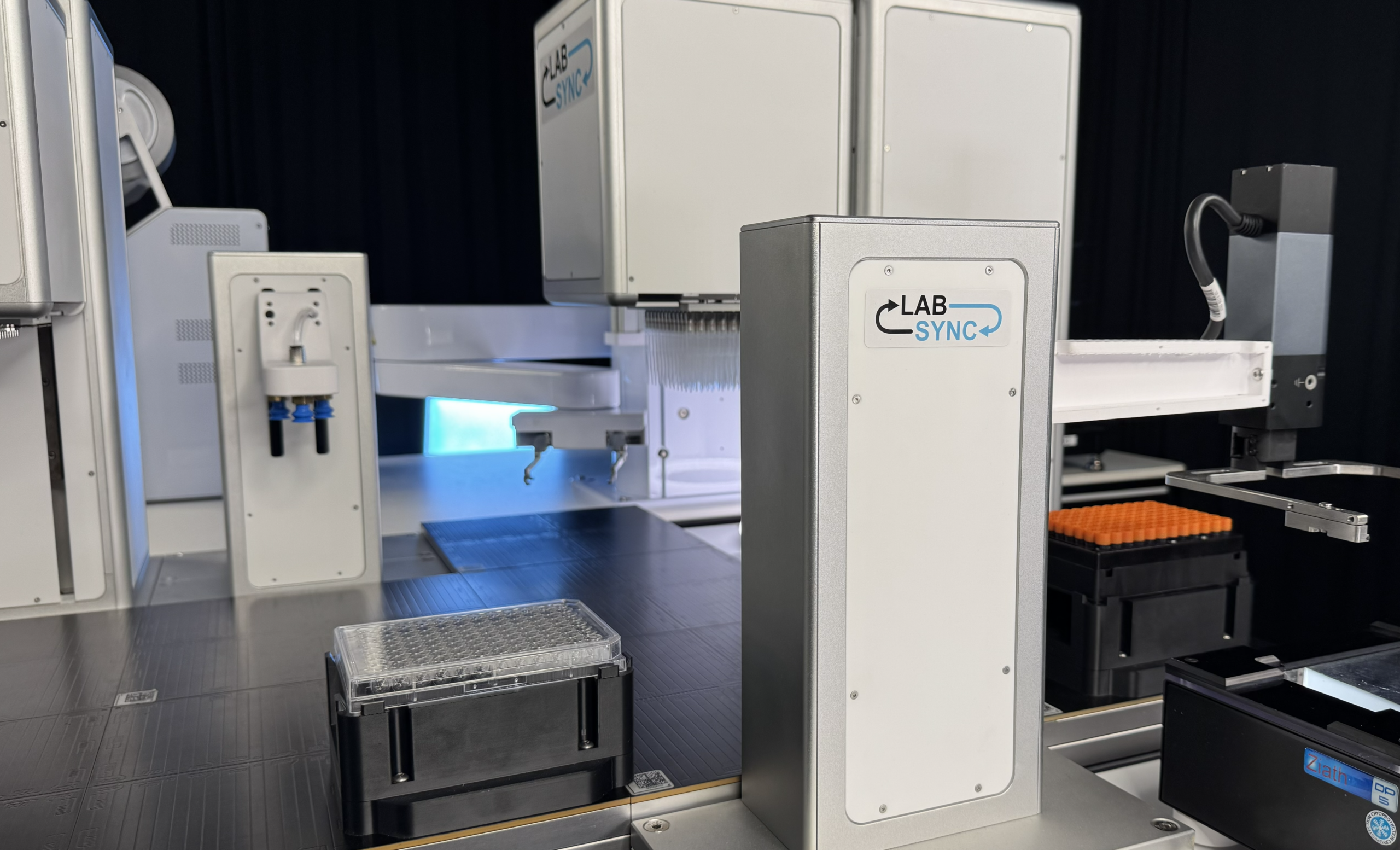
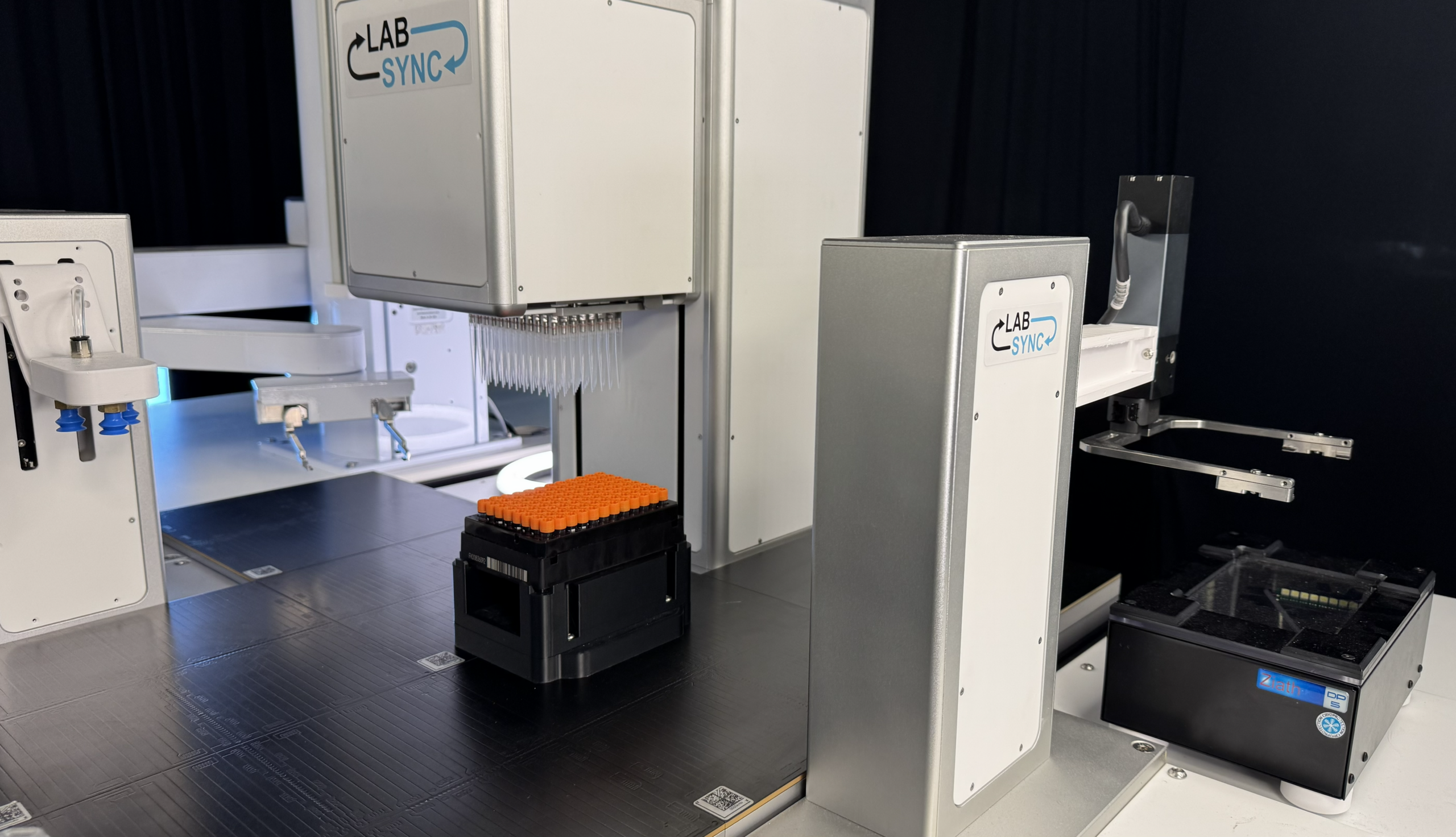
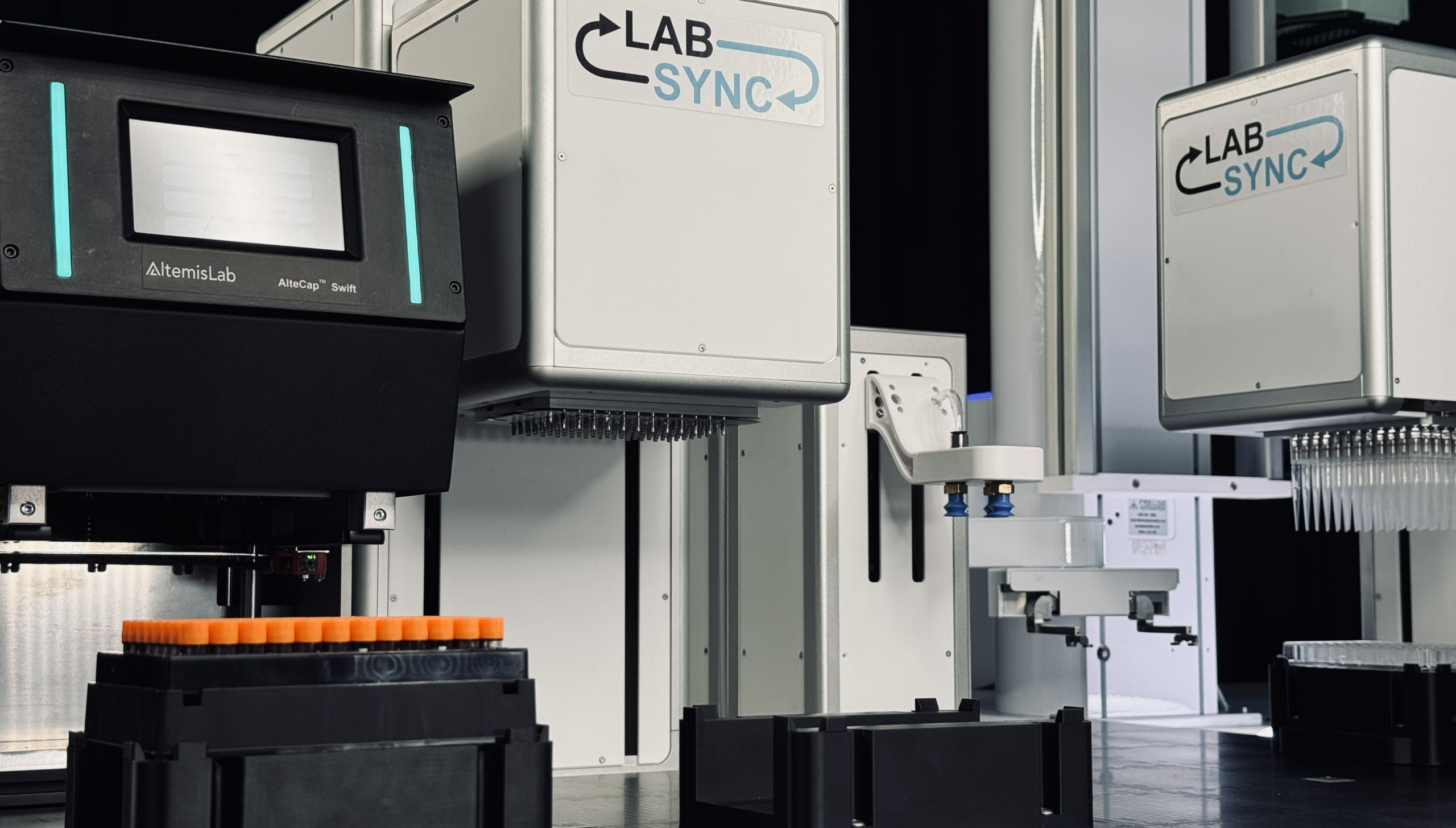
HoverLabs replaces the arm with a magnetically levitated planar surface. Multiple shuttles move simultaneously to multiple devices. No scheduling. No waiting. No bottleneck.
Processing
Multiple samples reach multiple devices simultaneously. No arm scheduling. No waiting for one task to finish before the next begins. Throughput scales with the size of the system.
Expansion
Additional planar tiles and processing modules connect to an existing system without disrupting current workflows. No reconfiguration. Prior investment is fully preserved as capacity grows.
No Bottleneck.
Modules mount directly above the planar surface and process samples in place. Pipetting, dispensing, delidding, and scanning all happen on the shuttle without lifting the plate.
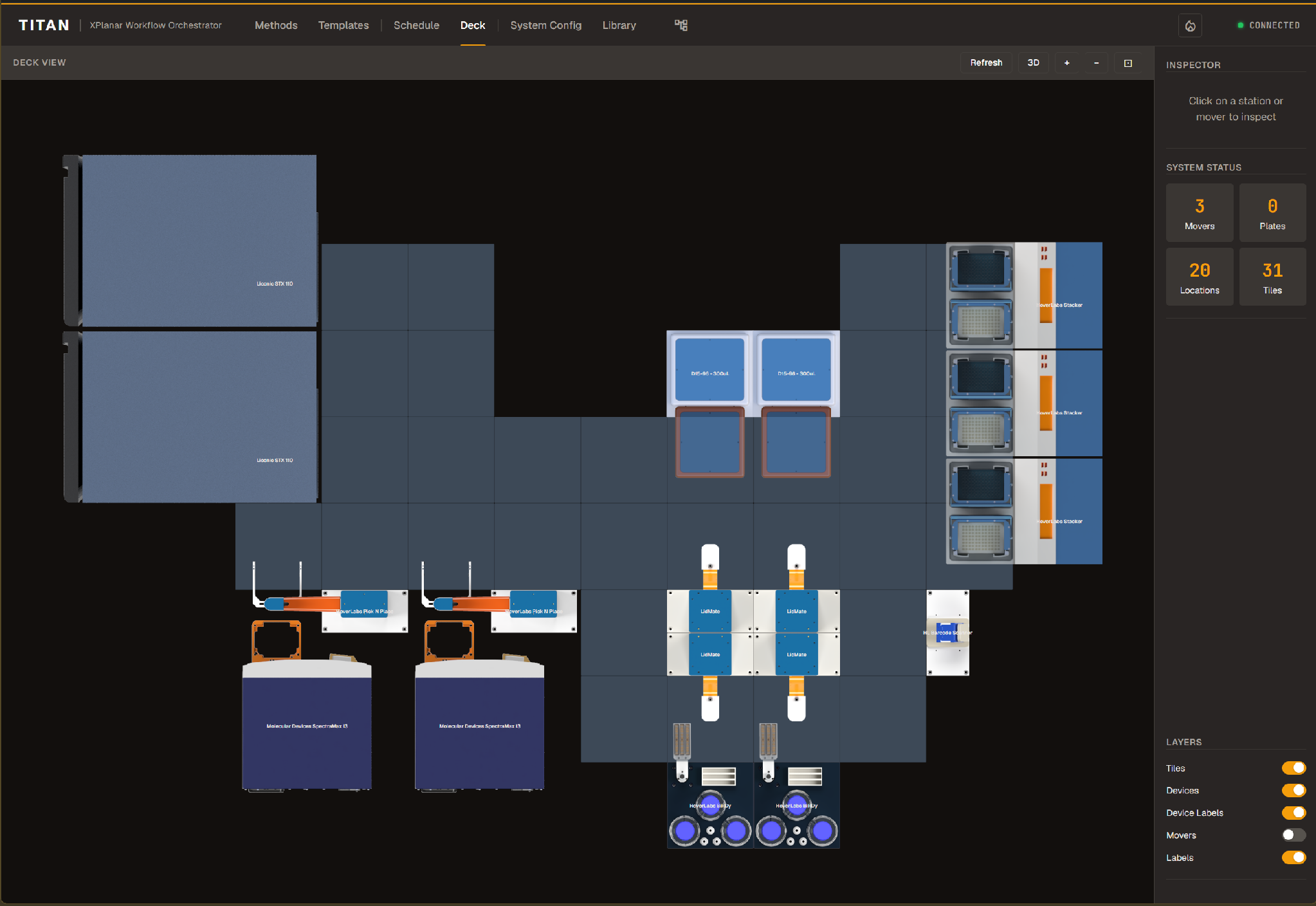
Software
Drag-and-drop workflow design. Coordinated device scheduling across the full planar system. Researchers design by outcome, not by step. The system handles all sequencing logic automatically.
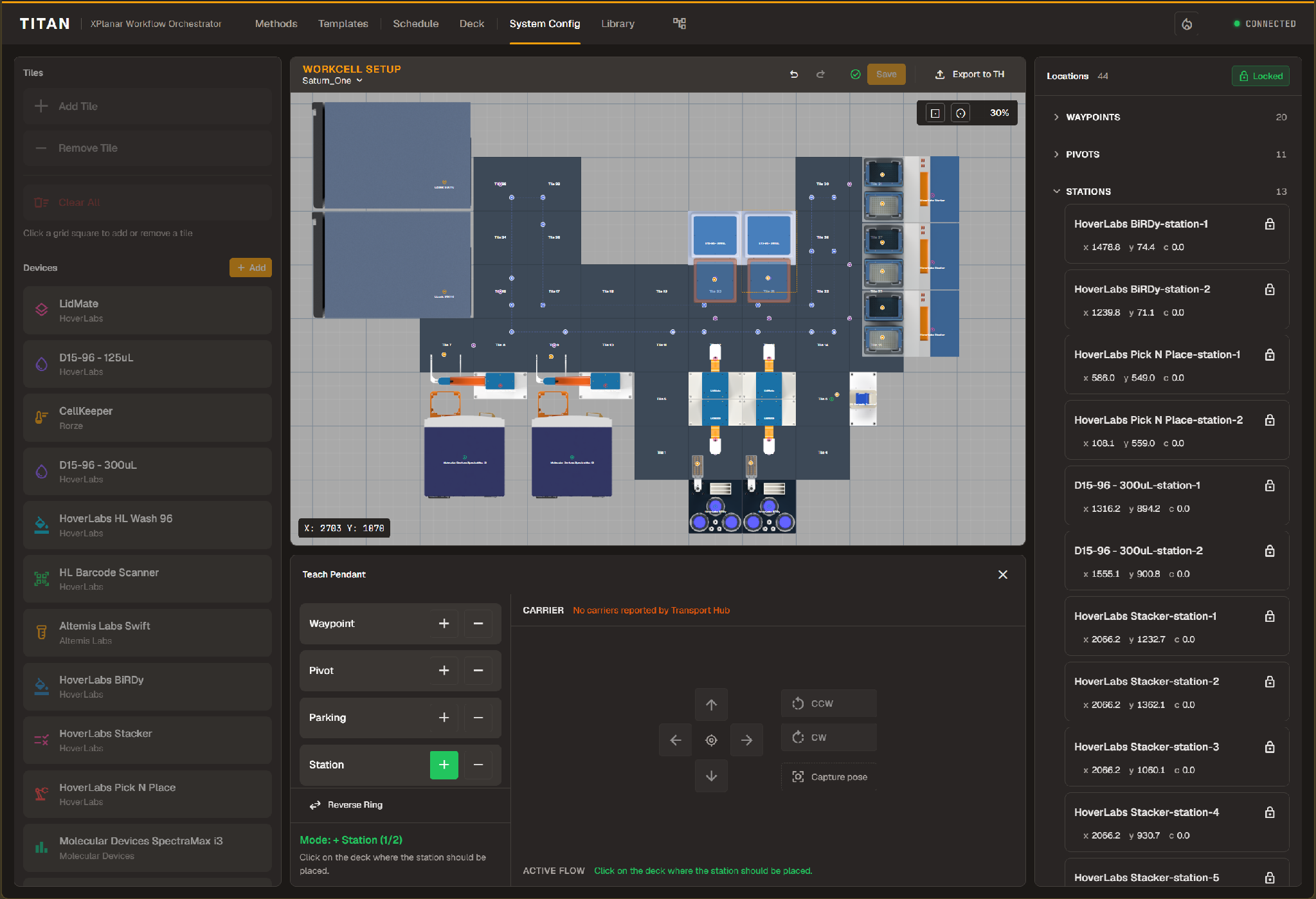
Integration
A pick-and-place module connects HoverLabs to external instruments. SyncSuite driver framework handles device communication for any third-party equipment.
Storage
Shovel-based storage devices feed plates directly onto the deck. Plates return to storage automatically after processing. No separate plate hotel or robotic arm transfer required.
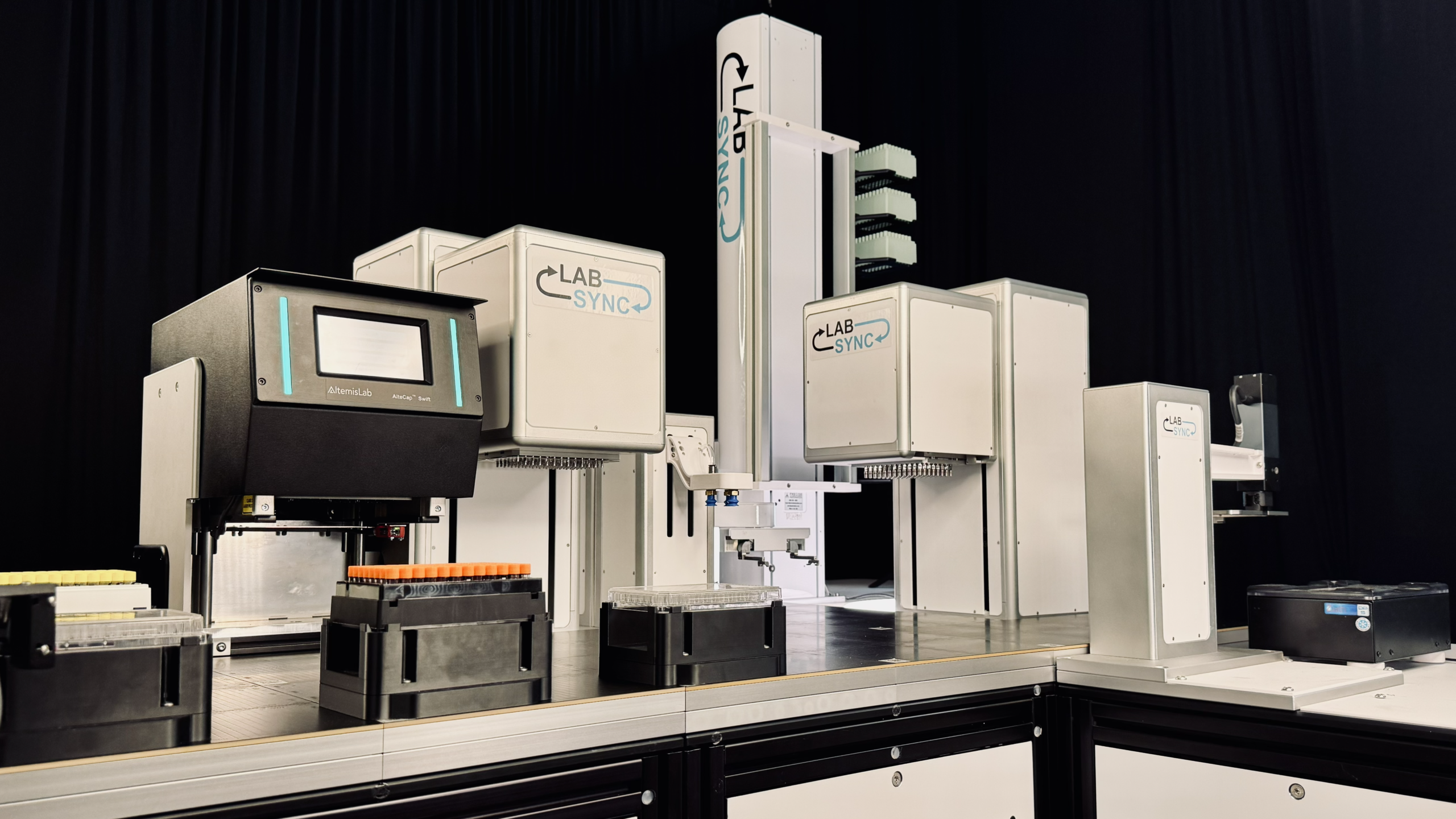
HoverLabs removes the constraint that has defined lab automation for 30 years. Early adopters are running deployments now. Commercial availability targeted for 2027.
Already running an arm-based workcell? Let us show you what parallel processing looks like.
Talk to Us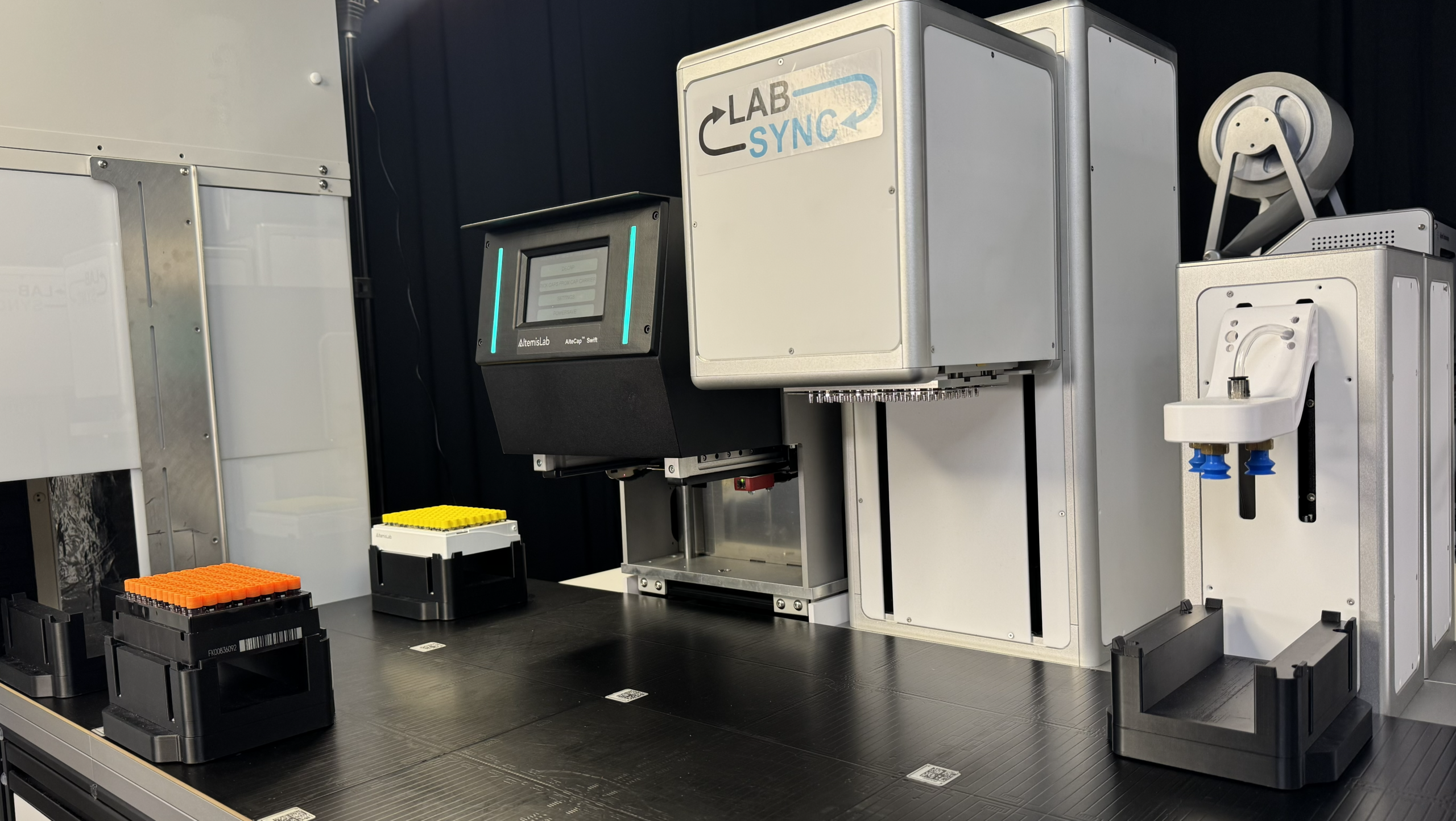
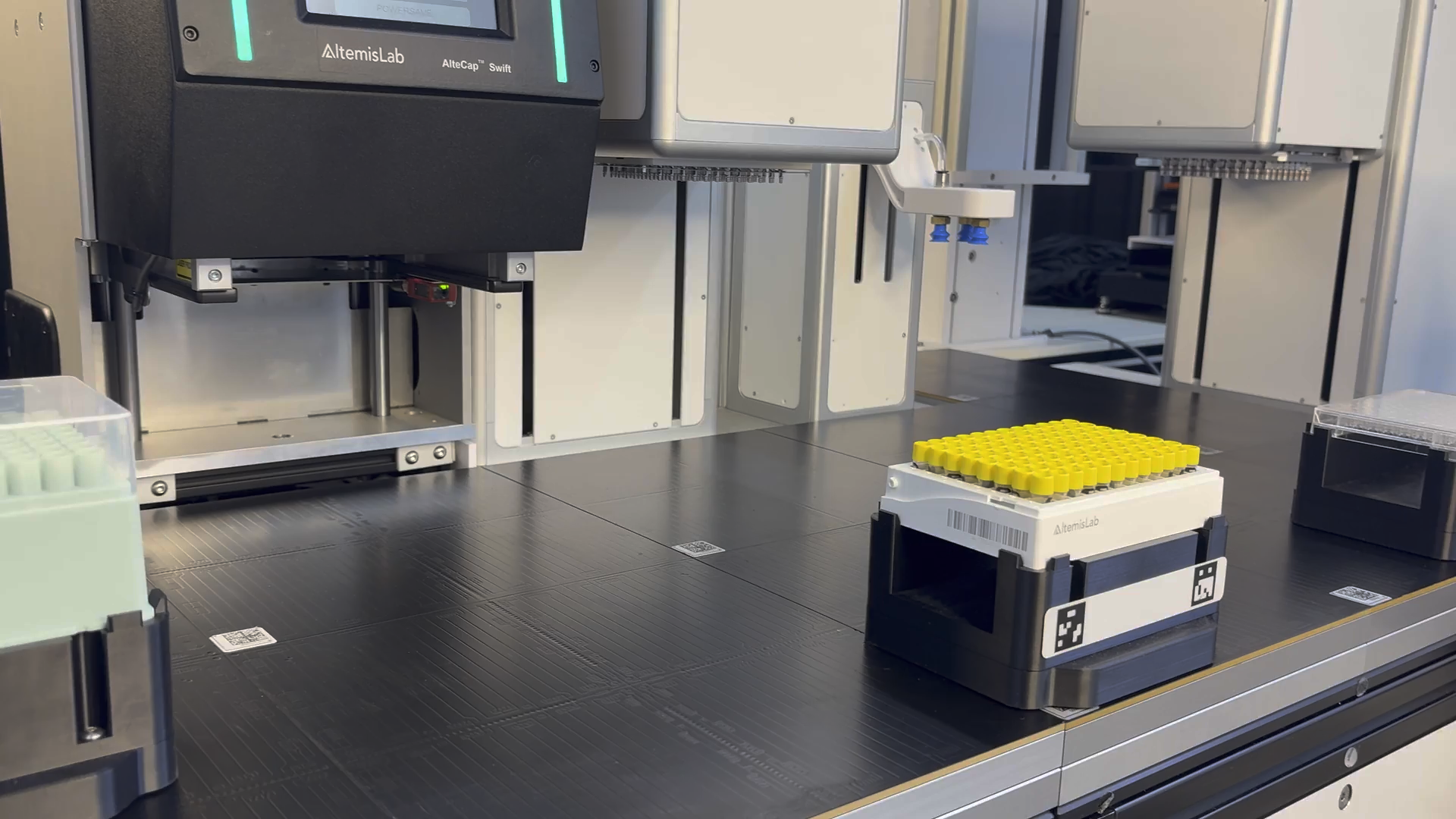
30 minutes. The platform running live. Multiple shuttles, multiple devices, simultaneously. No arm. No bottleneck.
Whether you are evaluating HoverLabs for a new build or looking to replace an existing workcell, we will show you exactly what parallel processing means for your throughput.